



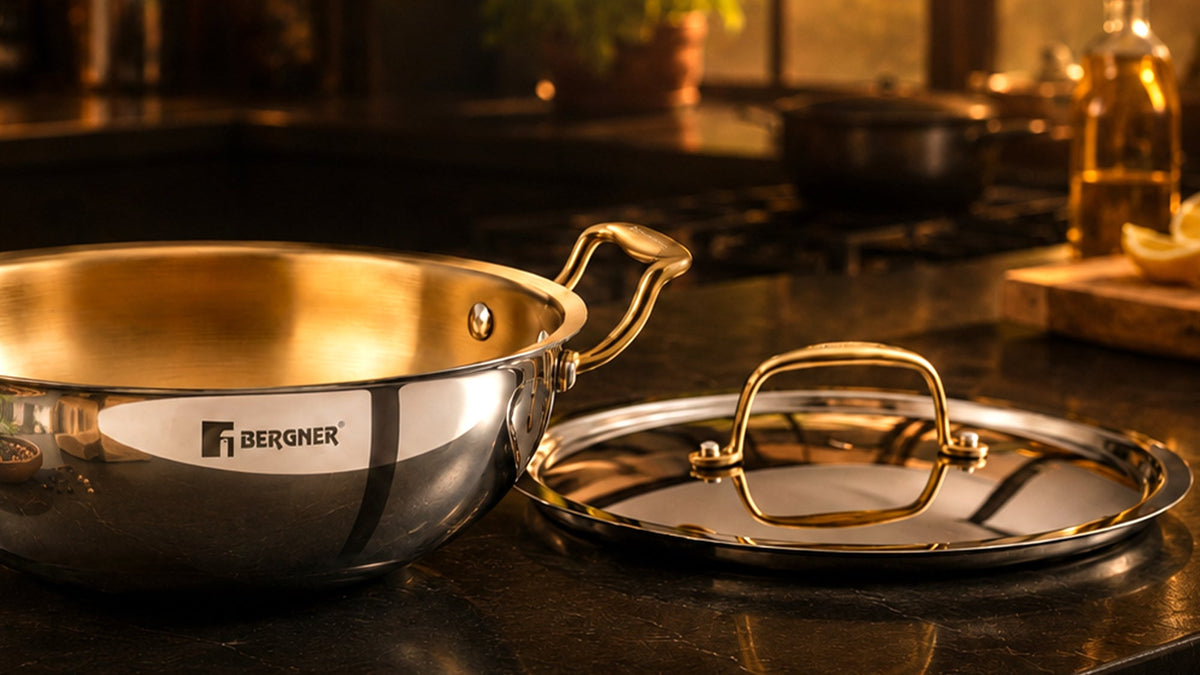
Brass utensils hold a special place in Indian homes. Many of us grew up eating from a pital thali or watching a grandmother stir kheer in a heavy brass handi. Today, brass cookware is making a comeback as families return to traditional ways of cooking.
But brass needs a little know-how. Cook the wrong food in it or skip care, and it can react with your food or tarnish quickly. This guide covers the most important dos and don'ts for safely using brass utensils.
Is Brass Cookware Safe for Cooking?
Many people ask this question: is brass cookware safe? The answer is yes, as long as it has kalai on the inside and you keep sour food away from bare brass. Brass is made of copper and zinc, and both can react with acidic food.
Kalai on brass utensils is a thin layer of tin that acts as a shield, so your food touches tin instead of brass. Without it, sour dishes can pick up metal. That's why US food safety rules based on the FDA Food Code don't allow brass to touch foods with a pH below 6, such as vinegar and fruit juice.
Buying brass from a trusted seller is important too: in 2025, the US FDA warned that some imported brass and aluminium cookware could leach lead into food.
What Are the Benefits of Brass Utensils?
The benefits of brass utensils are mostly practical, with a good dose of tradition:
- Holds heat well: Brass warms slowly and stays hot, which suits slow-cooked dal, kheer and halwa.
- Lasts for generations: A well-kept brass handi is often passed down in the family.
- Easy to restore: Kalai can be redone, and the outside polished back to a shine.
- Rooted in tradition: Ayurveda has long valued brass, and many families feel food cooked in it tastes richer.
So, is brass cookware healthy? It can be part of a healthy kitchen when it's lined and used correctly. However, there is little scientific proof of special brass cookware benefits beyond that.
What Are the Dos and Don'ts of Cooking on Brass Cookware?
Must Follow these simple rules to keep your brass safe and shining:
|
Do |
Don't |
|
Check that kalai covers the whole inside |
Cook in brass with worn or patchy kalai |
|
Cook milk, kheer, dal, rice, khichdi and halwa |
Cook tomato, tamarind, curd, kokum or lemon dishes in bare brass |
|
Cook on low to medium heat |
Heat an empty brass pan on a high flame, as tin melts easily |
|
Stir with wooden or silicone spoons |
Scrape with metal spoons or steel scrubbers |
|
Move food to another bowl after cooking |
Store food, curd or pickles in brass overnight |
|
Re-tin as soon as you see brass showing through |
Clean with bleach or harsh chemicals |
How Do You Clean Brass Utensils?
Good brass utensil cleaning keeps the shine and protects the kalai. Follow these steps:
- Wash soon after cooking with mild dishwashing liquid and warm water.
- Use a soft sponge inside, so you don't scratch the tin lining.
- For dull or dark patches on the outside, rub with lemon or tamarind and a pinch of salt.
- Rinse well and wipe completely dry, as leftover water causes tarnish.
- Store in a dry place, away from damp corners.
Brass vs Stainless Steel Utensils: Which Suits Everyday Cooking?
Both have a place in an Indian kitchen. Here's how brass vs stainless steel utensils compare:
|
What you care about |
Brass (with kalai) |
Tri-ply stainless steel |
|
Sour foods like tomato and imli |
Only with intact kalai |
Safe to cook |
|
Upkeep |
Polishing and re-tinning |
Simple washing |
|
Induction stove |
Usually not compatible |
Most pieces work |
|
Heat |
Holds heat well |
Spreads heat evenly |
|
Suits |
Milk, dal and festive sweets |
All kinds of daily cooking |
Where Bergner Cookware Fits in a Traditional Kitchen
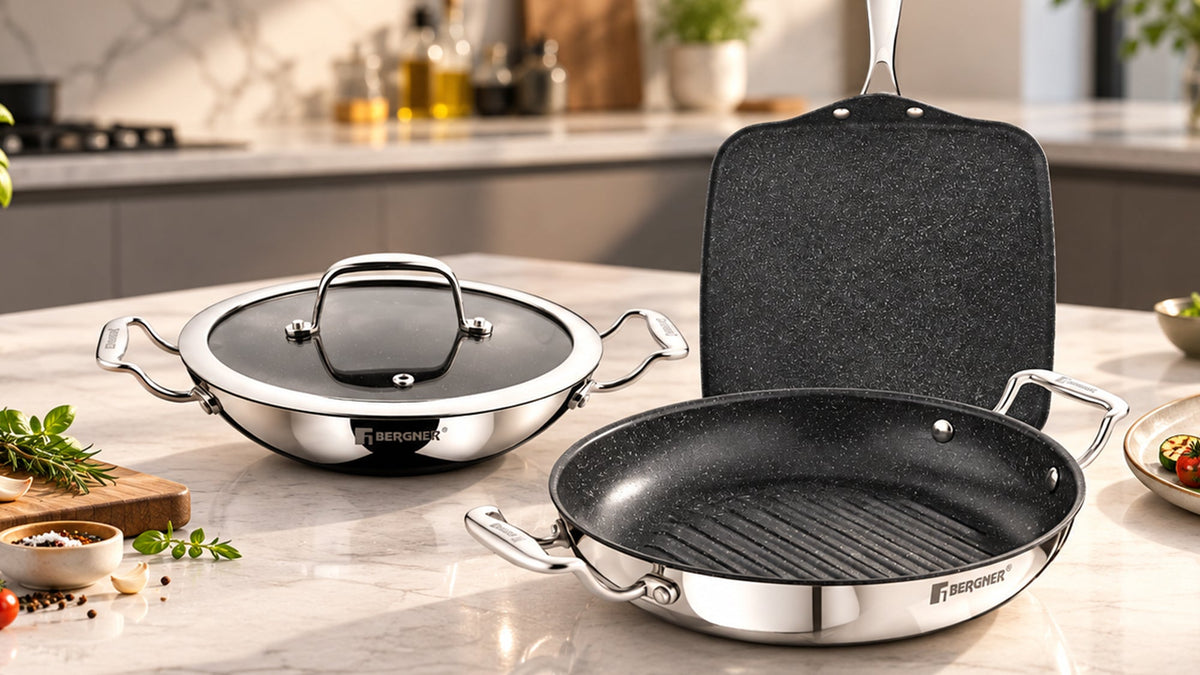
Most Indian kitchens mix traditional brass with modern cookware, and Bergner’s range is made for that everyday side of cooking. Bergner tri-ply stainless steel kadais and casseroles cook everyday food with even heat, and many pieces work on both gas and induction. Bergner non-stick tawas and frypans suit dosas, parathas and low-oil cooking, while the Excalibur lightweight cast iron range is made for slow-cooked curries.
Use brass for traditional dishes such as kheer and festive sweets, and reach for Bergner cookware for everyday cooking. Choose the right dishes for brass, keep sour foods out and clean it gently, and it will serve your family for years. Explore Bergner’s full cookware range.
FAQ:
Q. Is brass cookware safe and good for health?
A. Yes, brass cookware is safe for everyday cooking when you use it the right way. Brass has been valued in Ayurveda and traditional Indian kitchens for generations.
Q. Which foods are suitable for brass cookware?
A. Brass suits non-sour foods such as milk, kheer, dal, rice, khichdi, halwa and festive sweets.
Q. Which foods should not be cooked in brass cookware?
A. Sour and very salty foods should not be cooked in brass cookware, as they can react with the metal and affect the taste. These include tomato gravies, tamarind, curd, kokum, lemon and pickles.
Q. Does brass cookware change the taste of food?
A. Yes, brass cookware can change the taste of food, often for the better. Brass heats slowly and evenly, which many families feel gives kheer, dal and festive sweets a richer flavour. Sour foods are the exception, since they can react with brass and take on a metallic taste, so cook them in other cookware.
Q. Is brass cookware suitable for daily cooking?
A. Brass can be used daily for dal, rice and milk, but it needs regular polishing and re-tinning. For sour dishes and induction stoves, many families keep tri-ply stainless steel for everyday use.
Q. What is kalai and does brass cookware need it?
A. Kalai is a thin layer of tin coated on the inside of brass or copper vessels. Brass cookware needs it for safe cooking, as it prevents food from touching the copper and zinc in brass.

Leave a comment
All comments are moderated before being published.
This site is protected by hCaptcha and the hCaptcha Privacy Policy and Terms of Service apply.