



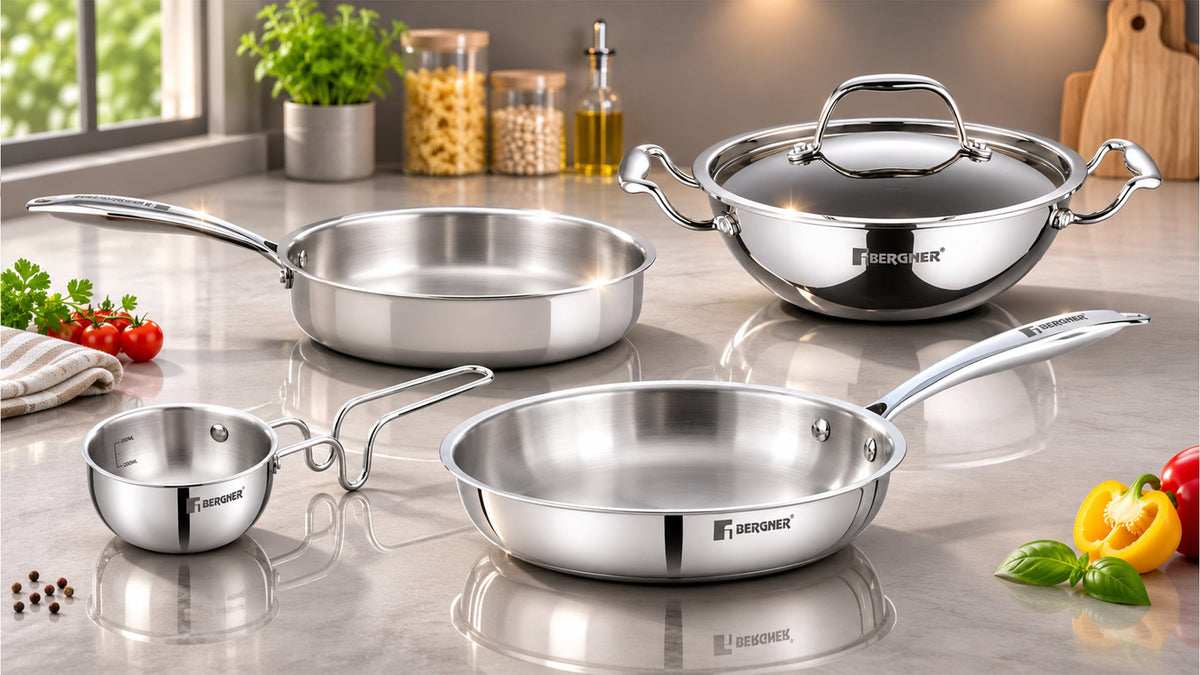
Each of the main types of cooking pans is built for a different job, from shallow frying to tempering spices, and Bergner offers pans for every one of them. This guide shows what each pan does and which ones an Indian kitchen needs.
Which Types of Pans for Cooking Do You Really Need?
Five pans cover most home cooking: a fry pan, a sauté pan, a kadai, a wok, and a tadka pan. Compare them by size and best use:
| Pan | Best for |
|---|---|
| Fry pan | Eggs and dosa |
| Sauté pan | Gravies and one-pan meals |
| Kadai | Curries and deep frying |
| Wok | Quick stir-fries |
| Tadka pan | Tempering spices |
When Is a Fry Pan the Right Choice?
A tri-ply fry pan is right for anything that needs to brown, such as eggs, dosa and cutlets. The Bergner Hitech Giro TriPly 20cm Frypan - Induction Bottom has tri-ply construction for even heat, a PFOA-free honeycomb non-stick coating for cooking with less oil, and a stay-cool handle. It works on induction, gas, ceramic and electric cooktops, which makes it a practical first pan for beginners. Metal spatulas are safe to use on it, and a quick hand wash keeps the coating in good shape.
Is a Sauté Pan Worth Adding to Your Kitchen?
Yes, if you cook gravies, pulao or other one-pan meals, because a deeper pan keeps everything in one place. The Argent Tri-Ply Stainless Steel Sautepan - Induction Bottom offers:
- Handle: a stay-cool cast handle with riveted joints.
- Warranty: 5 years.
Kadai or Wok: Which Should You Buy First?
Buy a kadai first, since it handles curries, deep frying and slow cooking, then add a wok for stir-fries and tossed noodles:
- Kadai: The Argent Tri-Ply Stainless Steel Deep Kadai - Induction Bottom holds 2.8 L and comes with a stainless steel lid and stay-cool cast handles.
- Wok: The Argent Tri-Ply Stainless Steel 22cm (2.2 L) Wok has a flared rim, a long handle and a stainless steel lid, and it cooks with less oil on a low flame.
Read More: Buying a Kadai? Here’s what you need to know!
Is a Tadka Pan Worth Having in an Indian Kitchen?
Yes, because daily tempering needs a pan sized for small amounts. Common tadka pan uses include sizzling spices for dal and warming a little butter or oil. The Argent Tri-Ply Stainless Steel 12cm (500 ml) Tadka Pan adds a stay-cool handle and a laser-etched measuring scale inside. It is induction and gas stove ready, so one pan suits dal, kadhi and sambar on any stove.
What Sets These Four Pans Apart?
Two pairs cause the most confusion: the fry pan and sauté pan, and the kadai and wok. Each table defines the pans in a pair side by side.
Frypan vs. Sautépan
| Feature | Frypan | Sautépan |
|---|---|---|
| What it is | A shallow pan for browning | A deeper pan for cooking in liquid |
| Sides | Low and sloped | Tall and straight |
| Typical dishes | Eggs, dosa, cutlets | Gravies, pulao |
Kadai vs Wok
| Feature | Kadai | Wok |
|---|---|---|
| What it is | A deep, rounded pan for frying and curries | A wide, flared pan for fast cooking |
| Heat | Steady, medium to low | Fast, high |
| Typical dishes | Pakora, paneer curries | Noodles, fried rice |
How Do You Care for Pans So They Last Longer?
Gentle habits protect any pan, whatever its material. Three are worth following:
- Let a hot pan cool before washing it, because sudden temperature changes can warp the base.
- Skip metal scrubbers on non-stick surfaces.
- Dry the pan fully before storing it.
Shop Bergner Kitchenware for Every Meal
Find the kitchenware your kitchen is missing and cook with confidence. Start here:
- Shop the Argent series for tri-ply pans.
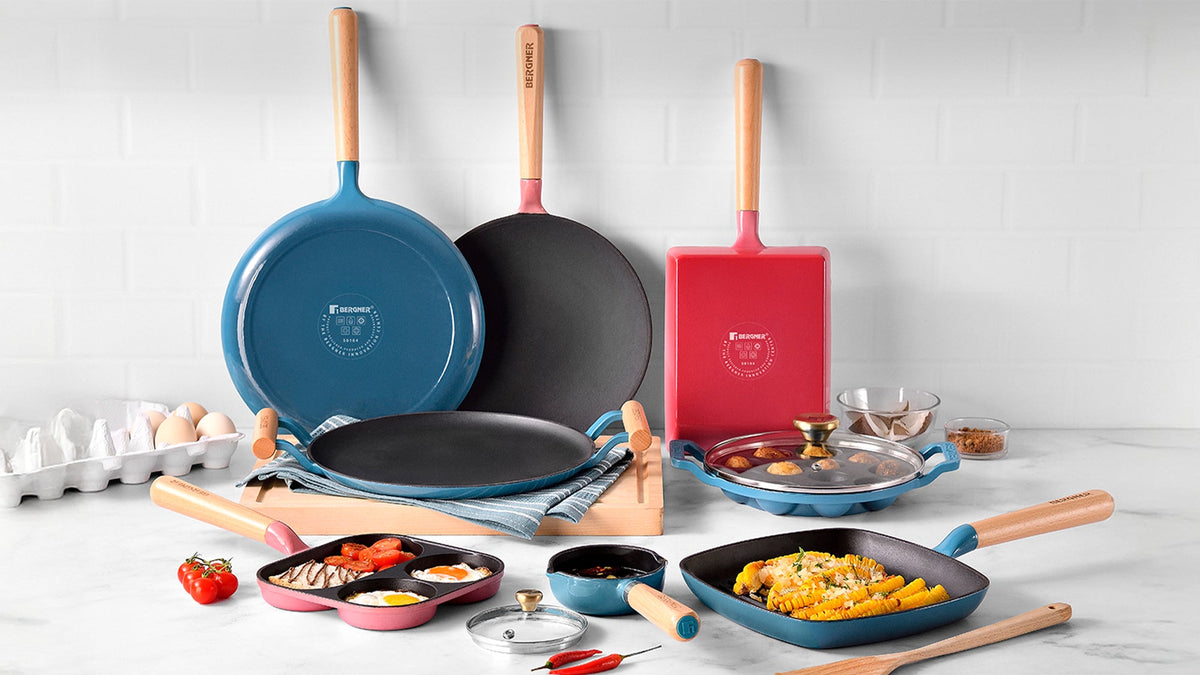
- Shop cast iron cookware for hearty, slow-cooked meals.
- Shop non-stick fry pans for eggs and dosa.
- Shop non-stick kadai for low-oil curries.
- Shop cookware sets for complete starter kits.
FAQs
Q. What are the different types of cooking pans?
A. Pans fall into three groups. Shallow pans such as the frypan and tawa suit frying and flatbreads, deeper pans such as the sauté pan, kadai and wok suit sauces, curries and stir-fries, and small pans such as the saucepan and tadka pan handle boiling and tempering.
Q. What is a tadka pan used for?
A. A tadka pan is a small pan for tempering, where whole spices, curry leaves or garlic sizzle in hot oil or ghee before going over dal or curry. Its size also suits heating a little butter without wasting fuel.
What is the difference between a kadai and a wok?
A. A kadai is deeper with sloping sides and two handles, made for deep frying and simmering curries. A wok has a wider mouth and a long handle for tossing food over high heat, which suits quick stir-fries.
Q. Which pans are essential for an Indian kitchen?
A. Start with a kadai and a tadka pan, since curries and tempering happen daily. Add a frypan for eggs and dosa and a sautépan for gravies as the kitchen grows.
Q. What is the difference between a fry pan and a sauté pan?
A. A frying pan has low, sloped sides that let steam escape, so food browns and crisps. A sauté pan has tall, straight sides and usually a lid, so it holds more liquid and suits sauces, gravies and one-pan meals.
Q. Which pan material is best for everyday cooking?
A. Choose by cooking style. Non-stick suits eggs, dosa and low-oil cooking, while tri-ply stainless steel is durable and suits high-heat frying and daily curries. Check that the base suits induction if you cook on it

Leave a comment
All comments are moderated before being published.
This site is protected by hCaptcha and the hCaptcha Privacy Policy and Terms of Service apply.